Home / Marble Mistakes That Feel Like Bad Luck but Are Really Habits
Marble Mistakes That Feel Like Bad Luck but Are Really Habits
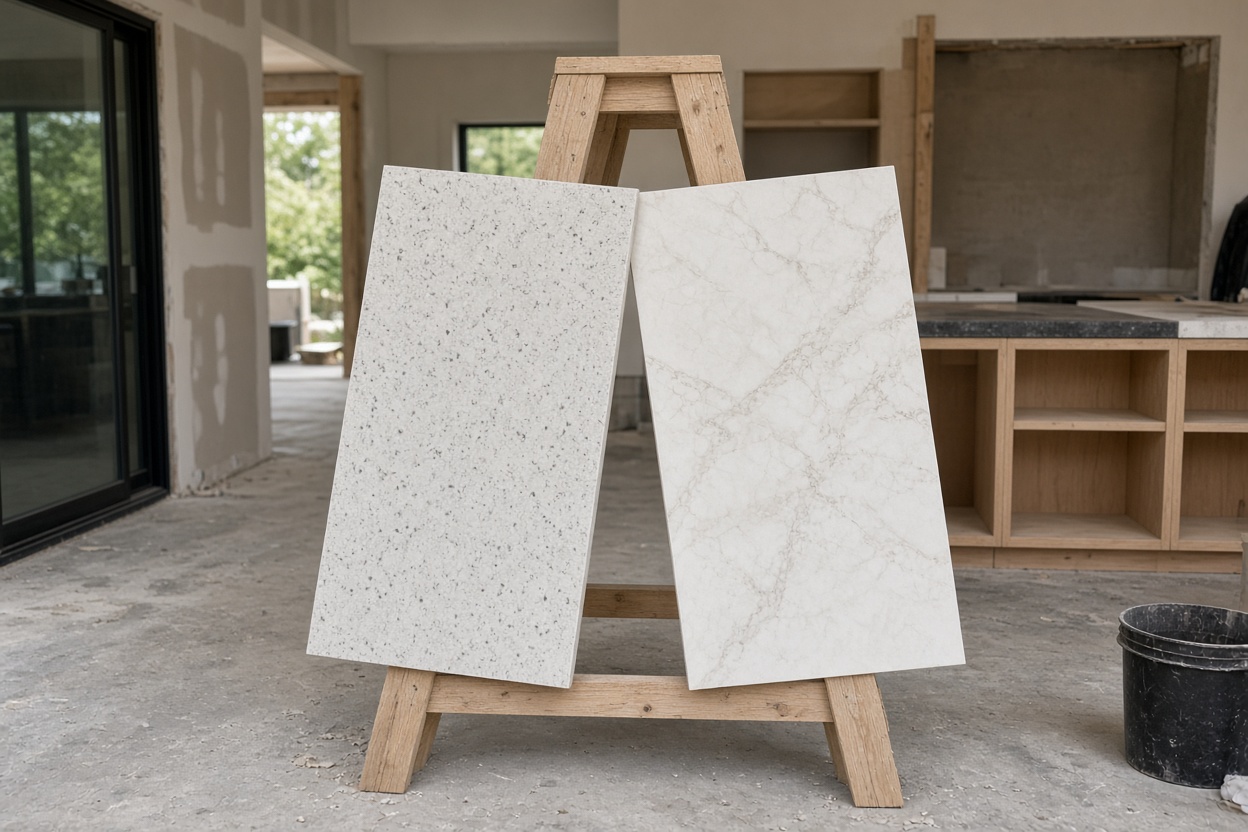
Most marble damage comes from a handful of daily habits, not from the stone being delicate or the installer doing poor work. A dull ring under a glass, a pale patch near the sink, a faint shadow where oil sat overnight: each one has a plain cause, and each one can usually be avoided once the cause is clear.
Etching Is Chemistry, Not a Stain
The most common complaint about marble is a dull, slightly rough spot that appears where something acidic touched the surface. That mark is an etch, and it is not a stain at all. Marble is made mostly of calcium carbonate, and acids dissolve a thin layer of it. What remains is a microscopically roughened patch that scatters light differently from the polished stone around it.
This is why wiping quickly does not always help. Once the acid has reacted, the surface has already changed. Quick wiping limits how long the reaction runs, but the only real prevention is keeping acidic things off the stone in the first place.
For anyone weighing stone options, the full breakdown of marble starts with this one fact: the same chemistry that gives the stone its soft, luminous look is what makes it react to vinegar, citrus, tomato, wine and many common cleaners.
The Lemon, the Wine, and the Morning Routine
Etching rarely comes from a dramatic spill. It tends to come from small routines:
- A halved lemon left on the counter while a drink is made.
- A wine glass set down with a wet base.
- A bottle of salad dressing or hot sauce that leaves a ring.
- Coffee and juice at the breakfast spot, where glasses sit for an hour.
- Toothpaste and mouthwash on a marble bathroom vanity.
None of these feel careless in the moment, which is why the damage reads as bad luck. A simple fix is to give acidic items a home that is not stone: a tray, a board, a small plate. Coasters with a felt or cork base help in the same way, and a tray under the bathroom products does the job on a vanity.
Stain Versus Etch: Telling Them Apart
The two problems need different responses, so it helps to tell them apart.
A stain sits in the stone
Oil, coffee, tea and some cosmetics can soak into the pores and leave a darker patch. The mark has color, and it often looks like a shadow beneath the surface. Stains can often be lifted with a poultice made for stone, which draws the material back out as it dries.
An etch is a change in texture
An etch usually looks lighter or cloudier than the stone around it, and in some light it is nearly invisible. Running a fingertip across it may reveal a slightly different feel. A poultice will not fix it, because nothing is trapped in the stone. The surface itself has changed, and it needs refinishing.
Sealer Is a Delay, Not a Shield
Many owners assume that a sealed countertop cannot be damaged. Sealer works by slowing how fast liquids soak into the pores, which buys time to wipe up oil and coffee before they leave a stain. It does very little against acid, because acid attacks the surface rather than soaking into it.
That distinction explains a lot of confusion. A freshly sealed counter can still etch within minutes. Sealer helps with stains, not etching, and it wears down with use and cleaning. A basic check is to put a few drops of water on the surface and watch. If the stone darkens and the water soaks in after a short time, the sealer is thin and due for a refresh. If the water beads and stays, the protection is still working.
Cleaners That Quietly Dull the Finish
Bathroom sprays, all-purpose kitchen cleaners, and anything marketed for limescale or soap scum often contain acids. Used weekly, they cause a slow, even dulling that feels like the stone aging prematurely. Because the change is gradual, it rarely gets linked back to the bottle under the sink.
The safer pattern is simple:
- Use a pH-neutral cleaner made for natural stone, or a small amount of mild dish soap in warm water.
- Wipe with a soft cloth, never an abrasive pad.
- Rinse with clean water and dry the surface so mineral deposits do not build up.
Skip vinegar and lemon-based "natural" cleaners. They are natural, but they are also acidic, and marble does not care about the label.
Heat, Weight, and Edges
Marble handles warmth better than many surfaces, but hot cookware straight from the stove can still cause trouble. The risk is less about scorching and more about thermal shock, and about the sealer and any resin repairs reacting to heat. A trivet is a cheap habit that removes the question.
Edges and corners are the other hidden weak point. A heavy pot dropped against a thin edge can chip it, and the area around a sink cutout is especially exposed because the stone is narrower there. Standing or sitting on an overhang puts leverage on the stone, which is how long cracks start. Marble is strong in compression and weaker when it is flexed, so overhangs without proper support deserve respect.
Honed or Polished: The Finish Changes the Story
Polished marble shows etching quickly, because the mirror-like surface makes any dull spot obvious. Honed marble has a soft matte finish that already scatters light, so small etches blend in much more. Many households that cook often choose honed for that reason, accepting a slightly softer look in exchange for less visible wear.
Honed stone also tends to show oil darkening a bit more easily, since the open surface takes up liquid faster. Neither finish is better in every case. The right choice depends on whether the owner prefers to keep damage invisible or keep shine at its peak.
Riverside Conditions That Add Their Own Wear
In a place like Riverside, with hot, dry summers and mineral-heavy tap water, a few extra habits matter. Hard water leaves white film and ring marks around faucets and sink edges, and those deposits are often scrubbed with the very acidic cleaners that harm marble. Wiping the area dry after use avoids the buildup in the first place.
Bright sun through a west-facing window can also warm a countertop through the afternoon. Warmth speeds up how fast spilled liquids dry and set, so a sticky spill on a sun-baked counter can leave a stronger mark than the same spill on a cool morning. Closing blinds during peak sun or wiping spills promptly takes care of most of it.
A Weekly Routine That Actually Holds
Care that depends on remembering rules tends to fail. Care built into the room tends to last. A routine that works for most kitchens looks like this:
- Keep a tray by the sink for citrus, oils and bottles.
- Wipe the surface at the end of the day with a neutral cleaner and dry it.
- Use coasters at the drinks area and trivets near the stove.
- Run the water test every few months and reseal if it soaks in.
- Keep an extra felt pad under anything heavy that sits in one place, such as a stand mixer or a ceramic canister.
Readers who want more practical stone care notes can follow a custom countertops riverside digest for ongoing tips on surfaces, finishes and upkeep.
When It Is Time for a Professional
Light etching on honed marble can sometimes be softened at home with a marble polishing powder, used according to its directions and tested first on a hidden spot. Deeper etches, widespread dullness, chips, and cracks are a different matter. Stone restoration professionals can grind and re-hone a surface so it looks even again, and they can fill chips and stabilize hairline cracks.
The best time to call is before a small problem is covered by a dozen attempts at home. Heavy scrubbing, acidic "removers" and abrasive pads often turn a small, easy repair into a larger one.
The Pattern Behind the Bad Luck
Marble rarely fails without warning. It records what happens on it: the glass left overnight, the spray used weekly, the pot set down in a hurry. Once those moments are replaced with a tray, a coaster, a neutral cleaner and a dry cloth, the stone tends to age gracefully, with a soft patina rather than a scatter of marks. That patina is part of why people choose marble in the first place, and it is the difference between a surface that looks lived in and one that looks neglected.