Home / Outdoor Kitchen Custom Countertops: Building an Island That Survives Full Sun
Outdoor Kitchen Custom Countertops: Building an Island That Survives Full Sun
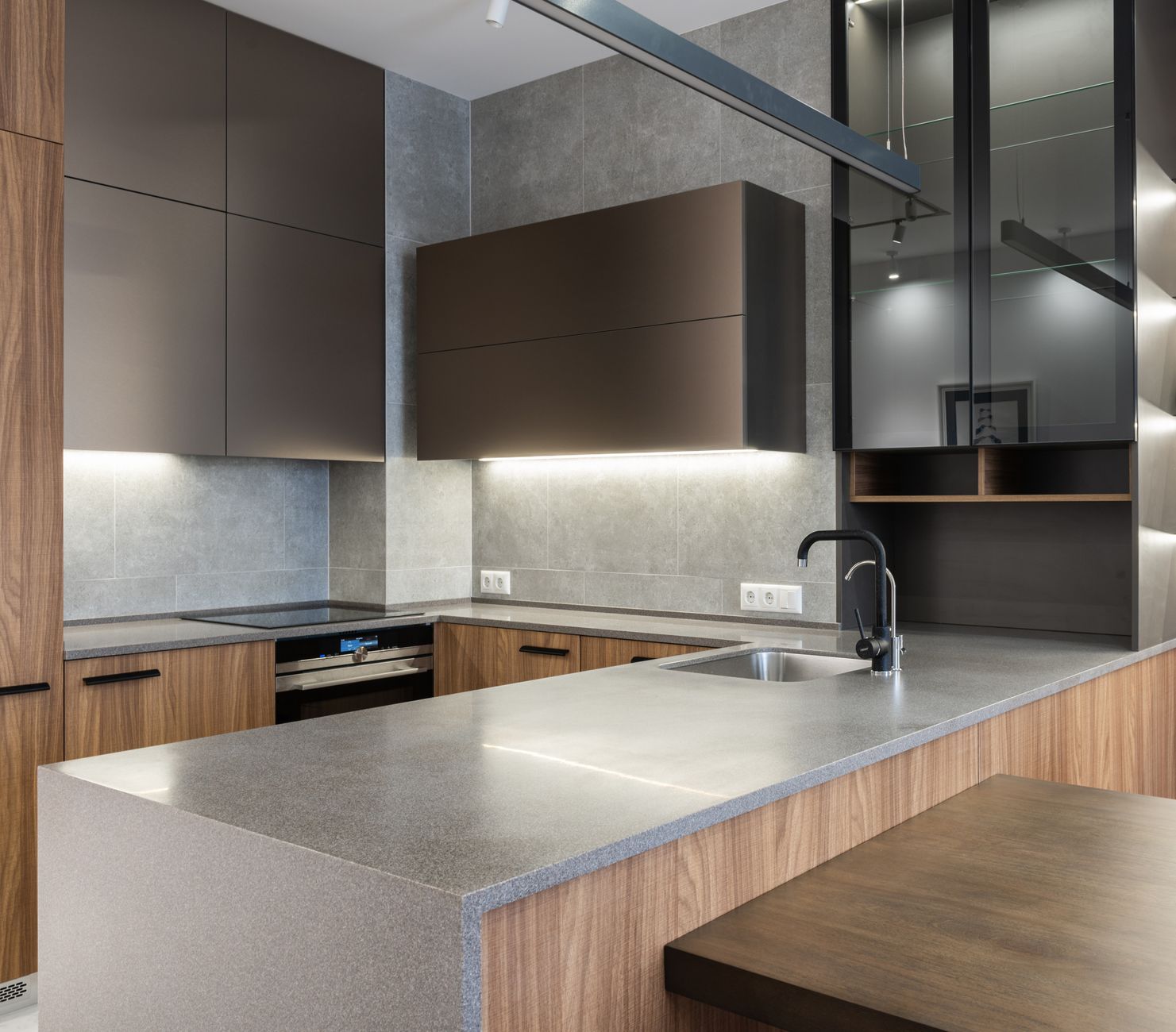
An outdoor island is not an indoor counter that happens to be outside. It sits in direct sun most of the year, carries an appliance that produces real heat under it, and is then ignored for months at a stretch. Most of the assumptions that hold up in a kitchen fail somewhere on that list.
The bad outdoor tops around the Inland Empire are rarely failures of workmanship. They are indoor details transplanted outdoors. A resin bound slab. A plywood substrate. A long run with no thought given to where it is allowed to move. A grill cutout sized off the dimension page by someone who never read the clearance page. Each is fine inside a house. None survives a Riverside summer with any dignity.
If you are pricing the work, the services page at http://riversidecustomcountertops.com is worth reading before you fall in love with a sample, because the exterior short list is far shorter than the interior one. What follows is the outdoor build specifically: the load case, the joints, the materials, the openings and what holds it up.
The load case here is sun, not frost
Almost all published guidance on outdoor stone is written for climates where the governing problem is freeze and thaw. That is a real design problem in Denver. It is not the design problem here. This valley sees a handful of nights that touch freezing, the material is rarely saturated when they arrive, and freeze damage needs saturation plus repeated cycling.
Four things actually govern. Ultraviolet exposure, which degrades anything containing a polymer. Surface temperature, which runs far higher than people expect. Daily thermal cycling, which is a fatigue load rather than a single event. And hard water, delivered here less by rain than by irrigation overspray.
The one part of the assembly that genuinely does freeze is the plumbing. An outdoor sink line and trap need a shutoff inside the house and a way to drain down, because a burst line under a finished island is a demolition job. The stone above it is indifferent. The copper below it is not.
Surface temperature, and what it does to a long run
Put an infrared thermometer on a dark polished granite top on an exposed island at four in the afternoon in July. Air temperature sits around a hundred and five. The stone reads well past a hundred and fifty.
That matters twice. A top that hot cannot be leaned on, sat at or used to land a plate, which makes the seating overhang you paid to cantilever unusable at exactly the hours people are outside. Colour is the biggest lever: a light or mid tone stone in a honed or textured finish runs meaningfully cooler in the same sun, and it kills the glare as well.
The second consequence is movement. A counter inside a house lives between about sixty five and eighty degrees forever. The same material outside swings from a forty degree January night to a hundred and sixty degree August afternoon, hundreds of times a year.
The dimensional change is small. A twenty foot granite run moves on the order of a sixteenth of an inch across that range, and a concrete run of the same length moves closer to a tenth. The numbers sound trivial. The forces behind them are not. Restrain a slab that wants to move and the load finds the weakest section of the piece, which is almost always the narrow bridge beside a cutout.
Where the joints go on a long run
The run gets broken where you choose it, or it breaks where it wants to. Break it at every change of direction. An L or U shaped island fabricated as one continuous mitred piece around the corner has no relief anywhere, and the corner is the most restrained point in the geometry.
Detail the outdoor seam as a movement joint, not a cosmetic one. Indoors the standard is a rigid polyester or epoxy filler, which is correct indoors because nothing moves. Outdoors a flexible ultraviolet stable compound in a properly sized joint lets the pieces breathe. It is slightly more visible, and it is the difference between a hairline gap in year three and a crack running out of the corner of the grill opening.
Two related details. Do not butt the top hard against the house wall: leave a gap, fill it with flexible sealant and cover it with the backsplash. And do not bond the slab down in a continuous full mortar bed, because the substrate and the slab do not move at the same rate. Spot bedding on the perimeter and at intervals is the outdoor practice for a reason.
Materials, ranked for an exposed island
Granite
Still the default and still the right default for most of these builds. Quarried rather than bound, so there is no polymer in it to break down. It does not fade and it tolerates radiant heat from an open hood without complaint.
Its real weakness outdoors is porosity, which varies enormously between stone families and is worth asking about for the specific material rather than the category. A dense low absorption granite is close to maintenance free outside. A thirsty one in a leathered finish under a sprinkler head is a different proposition.
Sintered stone
The category that includes Dekton and its competitors: mineral raw materials compacted under very high pressure and fired, with no resin in the recipe at all. Ultraviolet stable by construction, effectively zero porosity, no sealing ever. On technical merit it is the strongest performer here for a fully exposed island. It is also dense and unforgiving to cut, so it wants a shop with the right tooling, and a chipped edge is harder to dress than a chipped granite edge.
Porcelain slab
Shares those advantages and arrives much thinner, typically around twelve millimetres, which is why outdoor porcelain tops are nearly always built as a mitred box to read thick. That is fine provided the mitre is glued with an adhesive rated for exterior exposure and thermal cycling. The thinness matters most at the grill opening, where there is very little material either side of a large hole, so build up strips under the perimeter and around the cutout are not optional.
Cast concrete
It earns a place because it does things nothing else does: integral drainboards, curved forms, seamless runs at awkward geometry. It is also the highest maintenance option by a distance. Topical sealers give concrete its wet dark look and are exactly the ones that fail fastest under direct ultraviolet, where a penetrating sealer plus a wax schedule lasts far better. Expect patina and fine map cracking as normal behaviour rather than as defect.
Engineered quartz, which does not belong out here
Roughly nine parts mineral to one part polymer resin, and the resin is the whole problem. Ultraviolet exposure yellows it unevenly, so a run passing from under a pergola into open sun develops a visible gradient within a few years, and the daily heat cycling works on the binder as well. Effectively every manufacturer excludes exterior installation from the warranty in writing.
Marble and the calcite family
Marble, limestone and travertine on a cooking island combine three losing conditions. They etch on contact with acid, and an outdoor kitchen is a machine for producing citrus, vinegar, wine and tomato. They are porous, and grill grease is the worst thing you can ask a porous stone to resist. And the assembly gets rained on and then baked, which drives whatever soaked in deeper. Travertine belongs on the deck around the island, not on top of it.
Cutouts for the grill, the side burner and the sink
The openings are where outdoor tops actually fail, because they combine the most heat, the least material and the most appliance specific rules.
Read the clearance section of the grill documentation, not only the cutout dimension. Manufacturers publish a required clearance to combustible construction, and on a drop in unit that is normally satisfied by an insulated jacket. The jacket is specified for the framing, but it also keeps sustained radiant heat off the underside of the stone around the opening, which is the surface nobody ever inspects.
Radius every internal corner of every cutout. A square internal corner is a stress riser sitting inside a component that is thermally cycled hundreds of times a year. Indoors that detail is about surviving one hot pan. Outdoors it is about fatigue, which is slower and far more certain.
Watch the bridges. A side burner dropped in close to the front edge can leave a strip of material a few inches wide carrying the whole thermal and mechanical load. Widen the layout, move the appliance, or reinforce that strip from underneath before the top is set. It is free to fix on paper and expensive to discover on site.
For the sink, an undermount reveal outdoors collects leaf litter, ash and hard water, and its sealant joint sits in direct ultraviolet where it fails years earlier than the same joint indoors. A drop in sink with a flange is the defensible outdoor detail even though it has fallen out of fashion inside.
What holds it up
A masonry block island is the stronger and simpler structure. The top sets on the block on pads or dabs, with bearing under the full perimeter and on both sides of every cutout.
A steel stud island skinned in cement board is lighter, faster and perfectly adequate, provided the framing is laid out around the openings rather than the openings cut into whatever framing happened to be there. It needs continuous blocking under the perimeter, blocking either side of the grill opening, and continuous bearing under any section narrower than a hand span.
Plywood has no business in this assembly. It delaminates and swells with repeated wetting, and it is a combustible material sitting beside an appliance that carries a clearance requirement.
Overhangs need steel, and outdoors that steel must be stainless or hot dip galvanised. Plain mild steel under a porous stone in a wet environment eventually bleeds rust up through the material, and a stain arriving from underneath cannot be cleaned off the top. The same rule covers every anchor and bracket. A top that outlasts its own fasteners is a top that has to come off.
Sealing on an outdoor schedule
Sintered stone and porcelain need nothing, which is most of their argument.
Natural stone outdoors wants an impregnating sealer roughly twice as often as the same stone indoors, because ultraviolet, thermal cycling and rain all work against it and because grill grease is more aggressive than anything a kitchen produces. Test rather than guess. Put a few drops of water on the surface and a few drops of cooking oil beside them, leave them fifteen minutes, wipe, and look for a lingering dark shadow.
The maintenance issue almost nobody connects to the counter is irrigation. A sprinkler head that throws across the island deposits hard water mineral film every cycle, the sun bakes it on, and within a season there is a white haze that only a poultice or an acid safe stone cleaner will lift. Walk the zone while it runs before the island is built, and move the head.
Plan for ash and grease as well. The area around a grill opening takes a fine oily deposit continuously, and a textured finish holds it in the low points. Texture is still the right call outdoors for grip and glare, so pair it with a soft brush and a degreasing cleaner rather than expecting a cloth to do it. The islands still working well ten years on are the ones specified for the sun, allowed to move where they wanted to, and cleaned like something that lives outside.